How We Help
Every child brings a unique profile of strengths, challenges, and potential. Our programs are intentionally intensive because meaningful change requires enough high-quality practice opportunities for the brain to build stronger, more efficient neurological pathways for reading, language, attention, and learning.
Students typically attend Monday through Friday for approximately five hours per day over 7 to 12 weeks, depending on individual needs. This concentrated model allows for the repetition, feedback, momentum, and consistency that lasting progress often requires.
We serve children as young as four to five through high school and college-age students, including local families as well as families who travel to us from across the United States and internationally.


Dyslexia Evaluations
When reading or spelling feels harder than it should, a comprehensive evaluation can provide clarity. There is not one single test that identifies dyslexia. Instead, we conduct a comprehensive speech, language, and literacy evaluation that examines the many factors influencing reading development to form an informed diagnostic impression.
We assess the underlying language, phonological processing, literacy, and learning skills that impact reading success and help families understand the most appropriate next steps.
When indicated, occupational therapy evaluations are also recommended, as sensory-motor skills can play an important role in helping a child be as successful as possible academically.
Ideal for concerns such as: slow reading progress, poor spelling, frustration, family history of dyslexia, or uneven academic performance.
Reading & Literacy Intervention
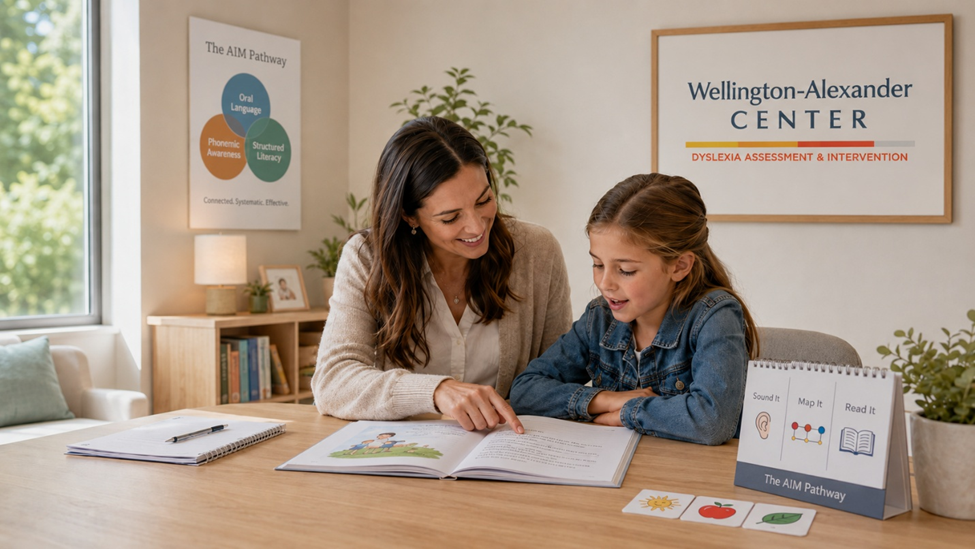
Our individualized intervention programs are grounded in decades of research and evidence-based practices. We work to identify the root causes of why reading, spelling, and writing is difficult and build the underlying skills needed for success from the bottom up. Rather than only addressing surface symptoms, we first target the foundational language and sensorimotor processes that support literacy development, then guide the child in applying those stronger underlying skills to reading, spelling, and written expression.
Students receive personalized instruction delivered within an intensive model designed to create meaningful, measurable, and lasting progress.
“She used to read so quietly you could barely hear her, like she was bracing for a mistake. The first time she volunteered to read out loud, I teared up. It felt like getting our kid back.”

Speech-Language Therapy
Strong oral language skills provide the pathway toward literacy and are foundational for academic success. Within our integrated transdisciplinary intensive model, speech-language support is used to strengthen the language processes that underlie reading, spelling, writing, comprehension, and overall learning.
Our team addresses areas such as expressive and receptive language, vocabulary development, articulation, narrative language, phonological processing, and literacy-based language demands as part of a coordinated intervention plan. The goal is not only to help students communicate with greater clarity and confidence, but also to build the language foundation they need to become stronger, more independent readers and writers.
Occupational Therapy
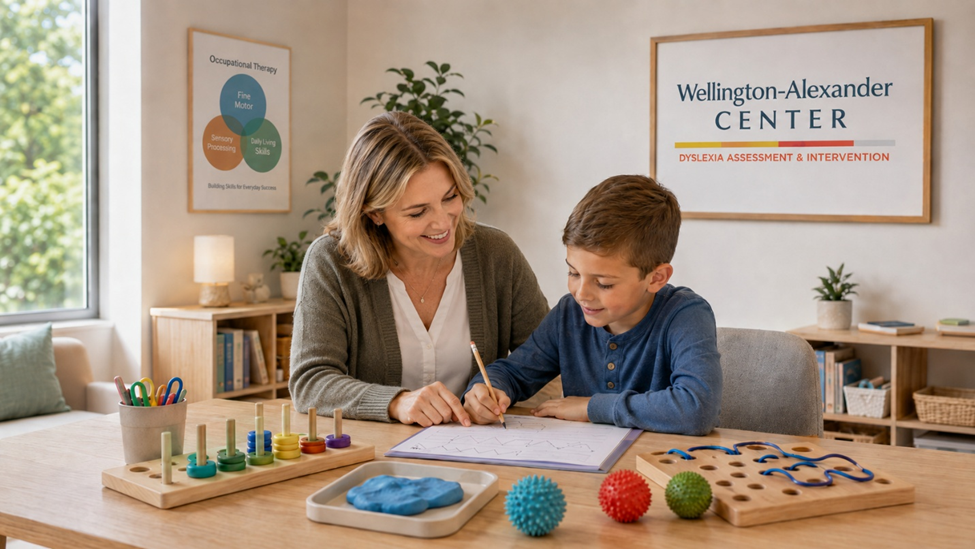
Occupational therapy (OT) supports the sensorimotor, fine motor, handwriting, coordination, and regulation skills that help children participate more successfully in learning. At Wellington-Alexander Center, OT services are designed to identify and address underlying sensorimotor challenges that may be contributing to difficulties with academic tasks, written work, attention, stamina, and everyday school routines.
When these foundational skills are strengthened alongside language and literacy intervention, students are better prepared to engage in learning, complete written assignments, regulate their bodies and attention, and participate with greater confidence and independence.
Executive Function Support
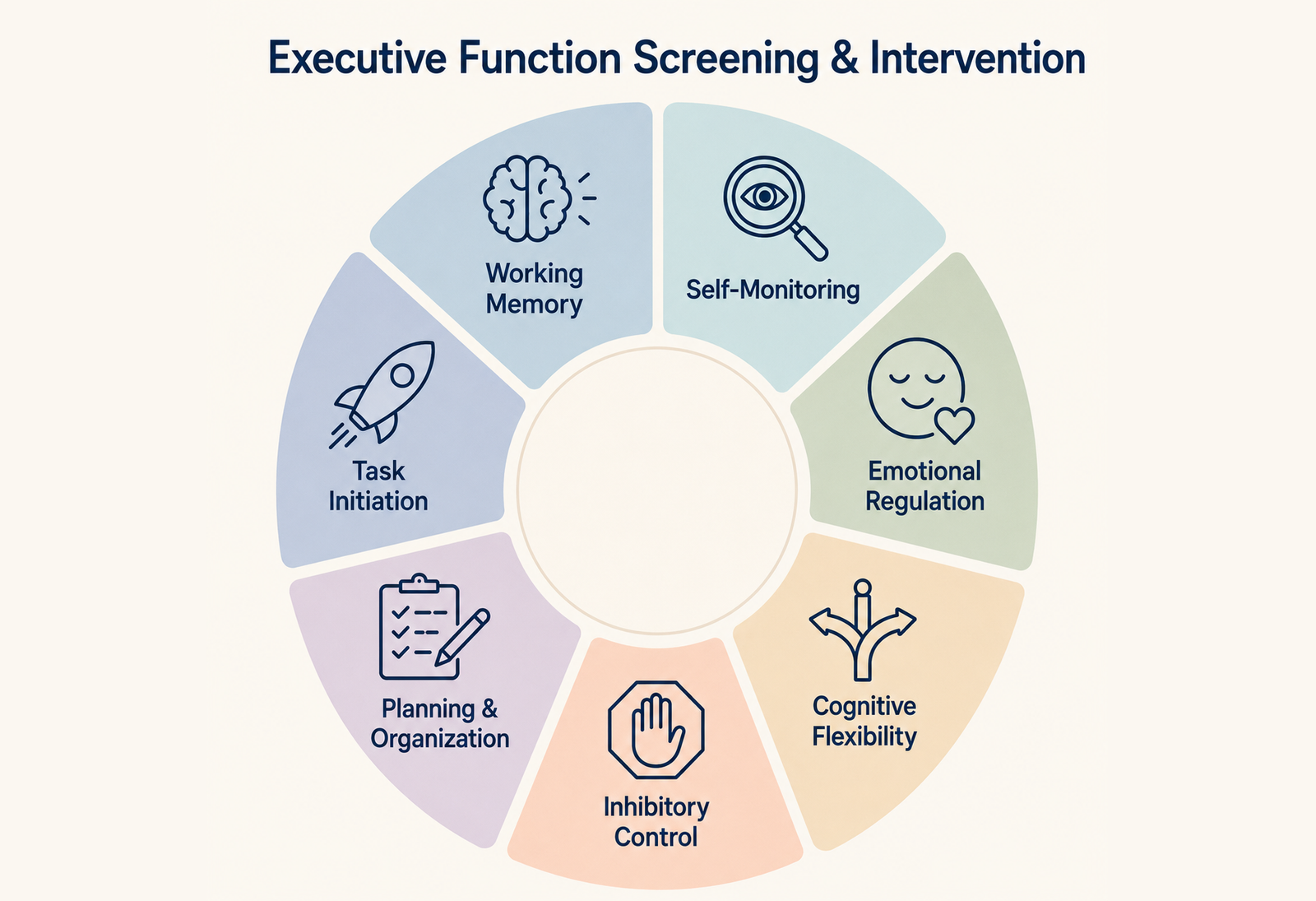
Some students know what to do but struggle to start, stay organized, manage time, regulate frustration, or follow through consistently. Executive function support helps students strengthen the skills needed for planning, attention, emotional regulation, task completion, independence, and academic success.
At Wellington-Alexander Center, executive function support may be integrated into a child’s intensive intervention plan or provided as a standalone service, depending on the child’s needs. When included as part of the intensive model, these skills are addressed alongside language, literacy, and sensorimotor development so students are better able to engage in instruction, manage frustration, and apply what they are learning with greater independence.
We are honored to have an internationally recognized pediatric clinical psychologist, Dr. Lynne Kenney, on our team. Dr. Kenney provides consulting evaluations, works directly with children and families, and helps train our staff. Her expertise includes executive functioning, ADHD, emotional regulation, and parent coaching.
Measuring Progress
Progress is monitored carefully throughout each intensive. Data is collected hourly and daily, then used collaboratively by our team to guide instruction and make thoughtful adjustments for the next day.
At the conclusion of the intensive program, post-assessment measures are completed to document growth using statistically sound methods.
A Whole-Child Approach
We use a transdisciplinary approach meaning our specialists work collaboratively under one roof, sharing observations and coordinating treatment in real time so each child’s plan feels connected, cohesive, and responsive to their needs.
Our team meets several times each week to formally discuss the children we serve, review progress, and thoughtfully coordinate next steps. In addition, our specialists communicate daily and often in between sessions to share observations, problem-solve in real time, and maintain continuity of care. Language, literacy, motor skills, attention, and emotional well-being are deeply connected, and this high level of collaboration helps us support the full picture of each child’s development.

Not Sure Where to Begin?
You do not need to have all the answers before reaching out. We would be happy to learn more about your child’s needs and help guide you toward the most appropriate next step.