Estimated reading time: 8 minutes
When parents hear the word dyslexia, they often think of a child who is already struggling to read.
But the early signs of dyslexia and language-based learning differences can sometimes be seen before a child begins formal reading instruction.
That does not mean every preschool child with speech, language, or letter-learning difficulties has dyslexia. It does mean that early signs are worth paying attention to.
At Wellington-Alexander Center, we believe that early identification can make a meaningful difference. When we understand a child’s early language and pre-reading profile, we can provide support before reading becomes a daily source of frustration.
Should I Be Worried About Dyslexia in Preschool?
Many parents wonder whether it is too early to ask questions about dyslexia in preschool.
The short answer is: it is not too early to pay attention.
Preschool is an important time for building the oral language, sound awareness, memory, attention, and early literacy skills that prepare the brain for reading.
Before children can read words, they need to develop several foundational skills. They need to hear the sounds in words, notice rhymes, remember sound patterns, learn letter names and sounds, follow directions, use language to express ideas, and begin to understand that spoken words can be connected to print.
For many children, these skills develop naturally through play, conversation, books, songs, and classroom experiences. For other children, these early skills are harder to develop and may need more direct support.
Early Signs Parents May Notice
Preschool children at risk for dyslexia or language-based learning challenges may show signs such as:
- difficulty learning nursery rhymes or recognizing rhyming words
- trouble learning letter names or letter sounds
- difficulty remembering names of colors, shapes, numbers, or familiar objects
- delayed speech or ongoing speech sound errors
- trouble pronouncing longer words
- difficulty following multi-step directions
- trouble retelling a simple story in order
- limited vocabulary or difficulty finding the right words
- difficulty blending sounds together
- difficulty separating words into smaller sound parts
- frustration with early literacy activities
- family history of dyslexia, reading difficulty, or language-based learning challenges
One sign by itself does not necessarily mean a child has dyslexia. But when several signs are present, or when parents have a strong concern, screening or evaluation can help clarify what is going on.
Why Early Identification Matters
Many bright children with dyslexia learn to compensate for a while.
They may memorize books, guess from pictures, rely on context, or avoid tasks that feel difficult. Because many children with dyslexia are intelligent and resourceful, their struggles may not be obvious right away.
But as the demands of school increase, those coping strategies often become less effective. Reading becomes more complicated. Spelling becomes more demanding. Written work increases. Children who were “getting by” may begin to fall behind.
Early identification gives families a chance to understand the child’s learning profile before the gap widens.
It also helps prevent a child from developing the painful belief that reading is hard because they are not smart or not trying hard enough.
Dyslexia Is Not a Sign of Low Intelligence
Dyslexia has nothing to do with low intelligence.
Many children with dyslexia are bright, creative, curious, and capable. They may have strong reasoning skills, wonderful ideas, and strong understanding when information is presented out loud.
The challenge is usually not thinking.
The challenge is often in the language systems that support reading and spelling, especially the ability to notice, remember, and work with the sounds in spoken language.
This is called phonological processing.
When phonological processing is weak, children may have difficulty connecting sounds to letters, sounding out words, spelling accurately, or reading fluently.
What Skills Come Before Reading?
Reading is built on oral language.
Before a child can read successfully, the brain needs to build strong foundations in areas such as:
- speech sound awareness
- phonological awareness
- phonemic awareness
- phonological memory
- vocabulary
- listening comprehension
- expressive language
- attention and self-monitoring
- early letter knowledge
- fine motor and visual-motor skills
These are the skills that help children become ready for structured reading instruction.
At Wellington-Alexander Center, we look closely at these underlying skills so we can better understand why a child may be struggling and what type of support would be most helpful.
What Is Phonemic Awareness?
One of the most important pre-reading skills is phonemic awareness.
Phonemic awareness is the ability to hear and work with the individual sounds in words. For example, a child needs to understand that the word dog is made of the sounds /d/ /o/ /g/. Later, the child will learn to connect those sounds to letters.
If a child cannot hear or hold those sounds clearly, learning to sound out words can be very difficult.
Some children have what we often describe as “fuzzy” sound awareness. They may not clearly notice the difference between similar sounds, such as /f/ and /th/ or /p/ and /b/.
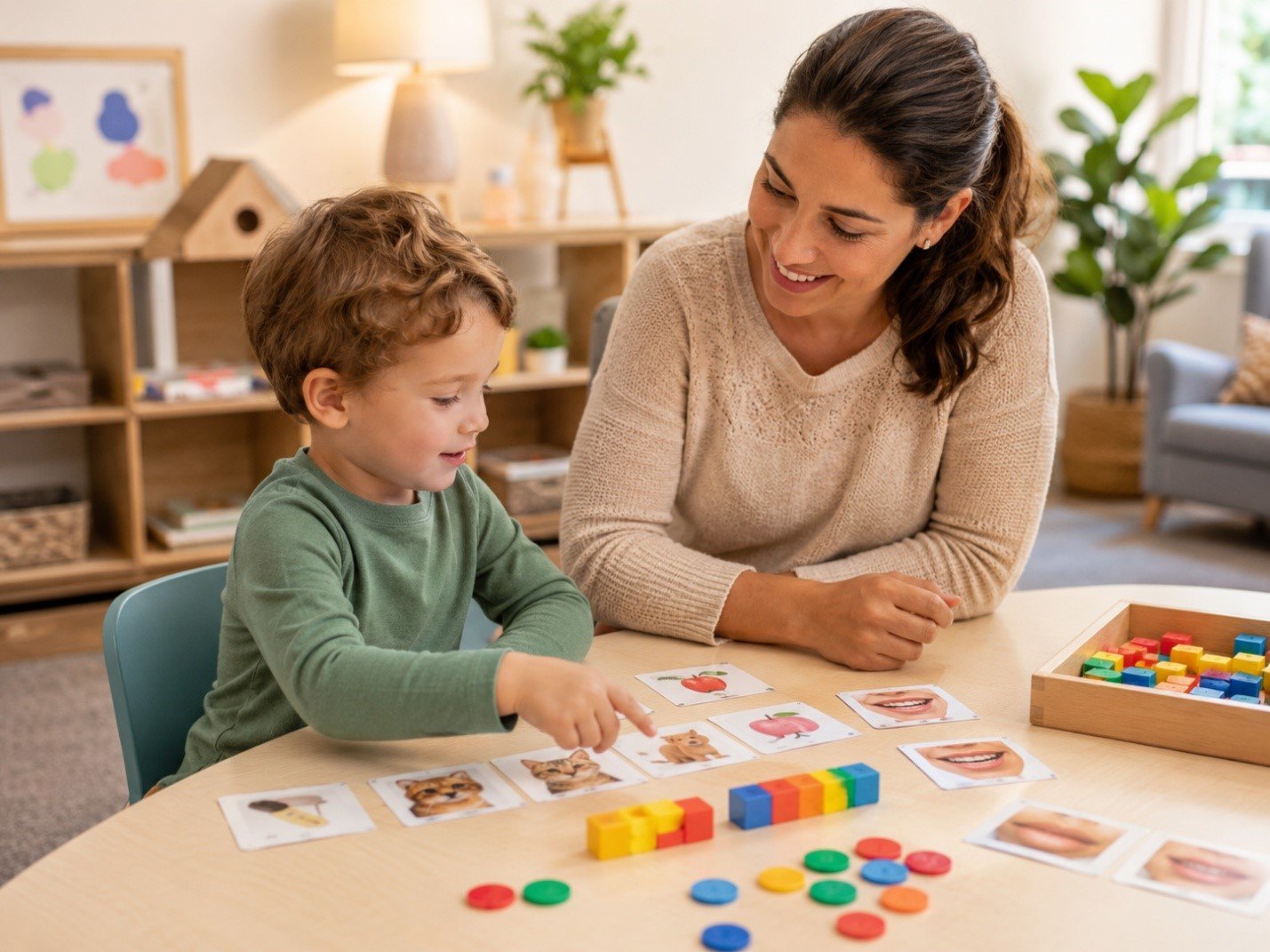
Through intervention, children can be taught to notice sounds more clearly by paying attention to what sounds sound like, what they look like when produced, and what they feel like in the mouth.
This helps build stronger sound representations, which later support reading, spelling, and written language.
What Is AIM to Prevent?
Wellington-Alexander Center developed AIM to Prevent to support preschool children who show early indicators of dyslexia or other language-based learning challenges.
The purpose of AIM to Prevent is not to push children into formal reading too early. Instead, the goal is to strengthen the foundational oral language and phonological skills that prepare children for reading.
AIM to Prevent focuses on skills such as:
- oral language development
- phonological awareness
- phonemic awareness
- phonological memory
- speech sound awareness
- vocabulary and concept development
- early sound-letter connections
- listening and attention
- readiness for kindergarten literacy instruction
This work is playful, developmentally appropriate, and designed for young children.
The goal is preparation, not pressure.
What Makes Wellington-Alexander Center’s Approach Different?
At Wellington-Alexander Center, we do not look at early reading risk in isolation.
We consider the whole child.
A preschool child’s readiness for reading may be affected by speech sound development, oral language, attention, memory, motor planning, fine motor skills, regulation, or confidence.
Our team includes professionals with expertise in speech-language development, literacy, occupational therapy, executive functioning, and child development. This allows us to look at the child’s profile from multiple angles and create recommendations that are specific to the child’s needs.
Rather than waiting for a child to fail, we want to understand what support may help the child move forward with confidence.
Does My Child Need a Dyslexia Preschool?
Parents sometimes ask whether their child needs a specific “dyslexia preschool.”
For most children, the better question is not whether they need a separate preschool, but whether they need early screening, targeted support, or specialized intervention.
A language-rich preschool environment is important. But if a child is showing signs of dyslexia risk, they may also need support that specifically targets the foundational skills for reading.
This may include direct work on speech sounds, rhyming, sound awareness, vocabulary, listening, memory, and early sound-letter connections.
A screening or evaluation can help determine whether your child’s current preschool environment is enough or whether additional support would be beneficial.
When Should Parents Seek Help?
You may want to seek support if your preschool child:
- has a family history of dyslexia or reading difficulty
- had delayed speech or language development
- continues to have difficulty producing speech sounds
- struggles to learn letters, numbers, colors, or shapes
- has difficulty rhyming
- has trouble following directions
- avoids books or early literacy activities
- has difficulty remembering words or names
- seems bright but struggles with sound-based language tasks
- becomes frustrated when asked to talk about letters or sounds
You do not need to wait until your child is failing in school to ask questions.
Early support can help clarify what your child needs and give you a plan.
Helping Children Before Reading Becomes Frustrating
One of the most hopeful things about early intervention is that many pre-reading skills can be taught.
Children can learn to hear sounds more clearly.
They can learn to notice patterns in words.
They can strengthen oral language and memory.
They can become more prepared for reading instruction.
At Wellington-Alexander Center, we want to help families identify early signs, understand their child’s learning profile, and provide support before frustration takes root.
If you are concerned about your preschool child’s speech, language, early literacy, or readiness for reading, we would be happy to help you determine whether screening or evaluation may be appropriate.
Schedule a Consultation
Contact Wellington-Alexander Center to learn more about early screening, preschool prevention, dyslexia evaluation, and intervention for children with language-based learning differences.